Slip-related incidents remain one of the most common safety concerns in commercial environments. High foot traffic, liquid spills, and elevation changes increase the risk of falls. Flooring selection plays a significant role in reducing these hazards. Slip resistant flooring helps protect occupants while supporting long term facility performance.
Non-slip flooring is not a single product category; it is a performance objective. Different materials achieve slip resistance through texture, composition, and surface behavior. Understanding how each option performs in real conditions is essential. Safety flooring must balance traction, durability, and maintenance requirements.
Why Slip Resistance Matters in Commercial Spaces
Slip-and-fall accidents pose serious financial and liability risks to building owners. Injuries can result in lost productivity, legal exposure, and long-term health consequences. Flooring that provides added traction significantly reduces these risks. This makes slip resistance a priority in workplace safety planning.
Heavy-traffic areas experience constant wear and exposure to the environment. Moisture from outdoors, cleaning routines, and weather conditions all affect floor performance. When surfaces lose grip, accidents become more likely. Slip-resistant flooring provides consistent underfoot stability.
Slip resistance also influences occupant confidence. People move differently when they feel secure underfoot. This improves flow through busy environments. Safer movement supports better overall space functionality.
Understanding Slip Resistant Flooring Performance
Slip resistance can become a complex topic due to testing standards and real-world variables. Floor condition, footwear, and contaminants all affect traction. No flooring solution performs the same way in every scenario. This complexity requires careful evaluation rather than blanket recommendations.
Governing standards involve multiple industry stakeholders. The ASTM International includes committees focused on resilient flooring and walkway safety. These groups evaluate test methods and performance thresholds. Consensus ensures standards remain practical and achievable.
Due to this complexity, slip resistance should be considered part of a comprehensive system. Flooring material, maintenance practices, and user behavior all contribute. Selecting the right product starts with understanding how a space will be used. Consulting early helps avoid mismatched solutions.
Rubber Flooring as a Slip Resistant Solution
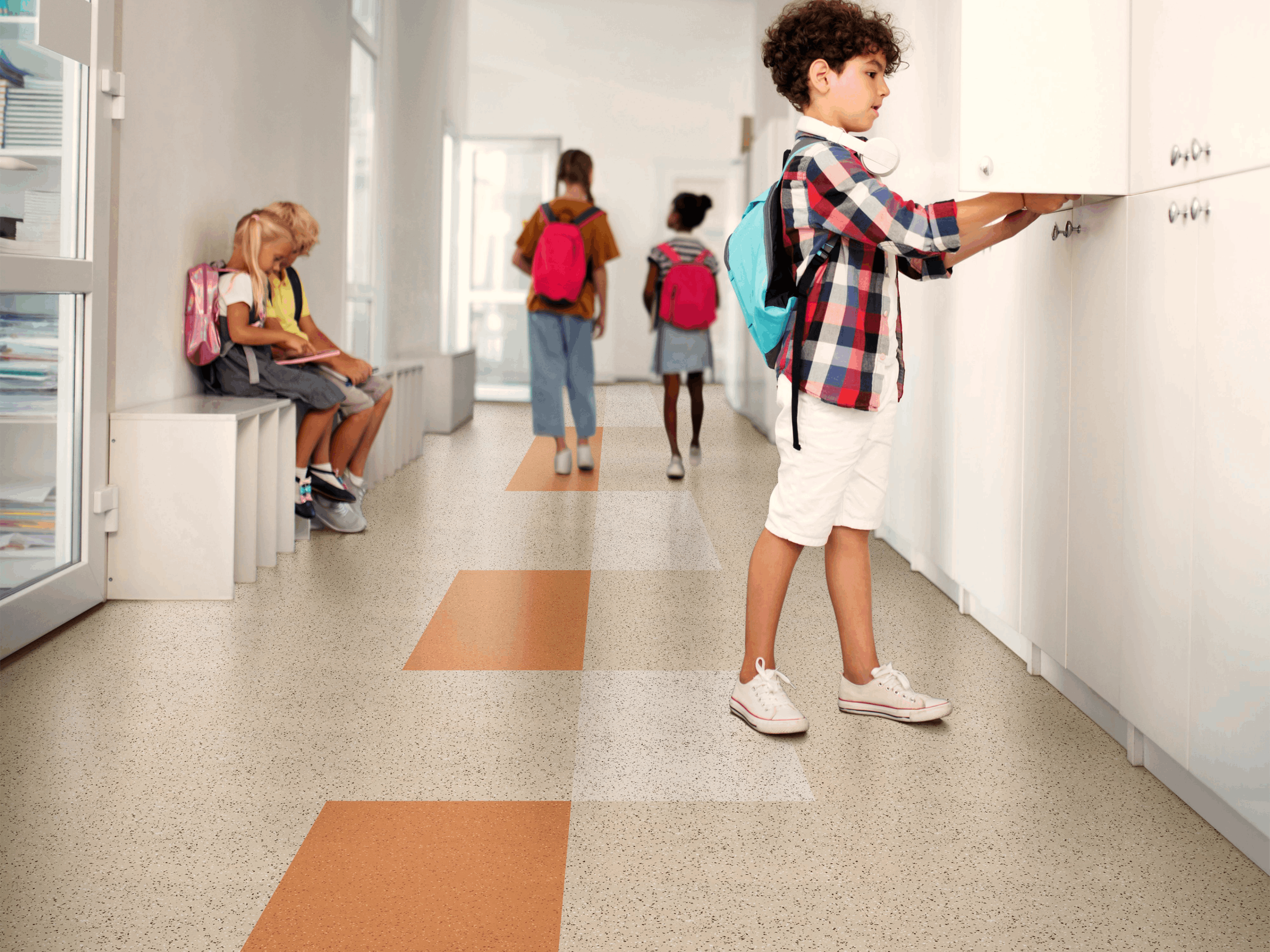
Rubber flooring remains one of the most reliable slip resistant options for most commercial environments. Its natural elasticity and surface grip perform well under changing conditions. Rubber maintains traction when floors become wet from outdoor traffic. This makes it ideal for entryways and transition zones.
Areas with elevation changes benefit greatly from rubber flooring. Ramps, sloped corridors, stairways and jetways require dependable grip underfoot. Rubber performs consistently in these environments. Airports frequently use rubber flooring for this reason.
Rubber also offers comfort advantages in high-traffic areas. Its softer feel reduces fatigue during prolonged standing or walking. This improves user experience in healthcare and transportation facilities. Slip resistance and comfort work together to enhance safety.
Where Rubber Flooring Performs Best
Rubber flooring excels in environments exposed to moisture and heavy use. Entry corridors, stairways, lobbies, and circulation spaces benefit from its traction. Baggage claim areas and airport jetways rely on rubber for stability. These zones often involve sloped surfaces and rolling equipment.
Healthcare facilities increasingly prioritize slip resistance. Rubber supports safer movement for patients, staff, and visitors. Its underfoot comfort also reduces strain during long shifts. Safety flooring becomes part of a broader wellness strategy.
Office buildings and institutional spaces also benefit from rubber floors. High-traffic corridors experience less wear-related slipperiness. Maintenance teams appreciate its resilience. Consistent traction supports daily operations.
Considering Maximum Slip Resistance Options
Some environments require higher slip resistance than rubber alone can provide. Specialized safety flooring includes materials with embedded aggregates. These surfaces introduce grit, increasing traction. They are designed for extreme conditions.
Particular vinyl safety floors incorporate abrasive particles within the wear layer. This enhances grip even when wet. These products are used selectively due to their texture. They represent one of the highest slip resistance options available.
Other environments may require ceramic or quarry tile solutions. These materials are waterproof and highly durable. Their textured surfaces support traction in demanding conditions. Selection depends heavily on use case and risk tolerance.
Stair Treads and Vertical Transitions
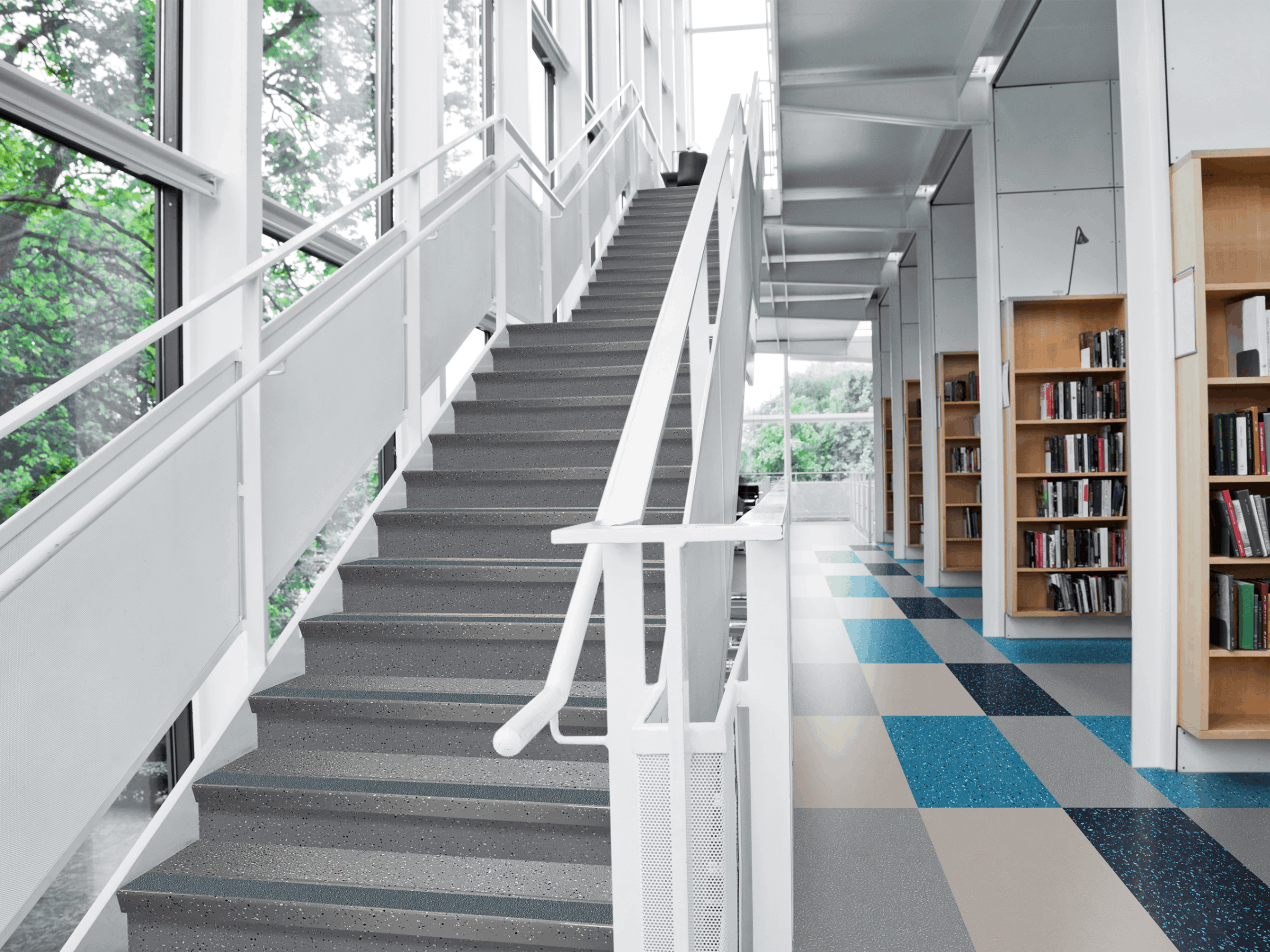
Stairways present unique safety challenges in commercial spaces. Elevation changes significantly increase fall risk. Rubber stair treads provide excellent traction and visibility. They also reduce noise and impact.
Stair treads clearly define walking paths. Edge contrast improves perception and confidence in movement. Rubber absorbs shock and supports safer footing. This makes it a preferred solution for multi-level facilities.
Ramps and transitions benefit from similar considerations. Rubber flooring maintains grip as slopes change direction. This consistency reduces hesitation and missteps. Vertical circulation areas demand careful material selection.
Maintenance and Slip Resistance Over Time
Slip resistance depends heavily on proper maintenance. Dirt, residue, and moisture reduce surface traction. Even the best flooring performs poorly when neglected. Maintenance protocols directly impact safety outcomes.
Rubber flooring supports consistent performance with routine cleaning. It does not rely on surface coatings for traction. This reduces long-term variability. Simpler maintenance improves reliability.
Footwear also influences slip resistance. Facilities should consider occupant behavior and shoe types. Flooring works best when paired with appropriate policies. Safety flooring supports but cannot replace responsible practices.
Consulting for the Right Flooring Solution
Slip resistant flooring selection should never rely on assumptions. Each space has unique traffic patterns and exposure conditions. Consulting with flooring experts helps identify appropriate solutions. This reduces risk and improves long-term performance.
Evaluating how spaces are used guides better material choices. Entry zones, ramps, corridors, and stairways require different approaches. Experts consider maintenance capabilities and user behavior. This holistic view supports safer outcomes.
Consultation also ensures compliance with relevant standards. It aligns flooring selection with real-world conditions. This proactive approach protects both occupants and owners. Informed decisions reduce costly mistakes.
Final Thoughts on Slip Resistant Flooring
Slip resistant flooring plays a critical role in workplace safety and facility performance. Rubber floors remain the primary choice for most commercial environments. They provide reliable traction, comfort, and durability. When conditions demand maximum resistance, alternative materials may be appropriate.
Understanding how spaces function is key to proper selection. Safety flooring works best as part of a complete system. Material choice, maintenance, and usage must align. Thoughtful planning creates safer environments.
For guidance on slip resistant flooring solutions tailored to your project; connect with a Community representative today.